Internal factors
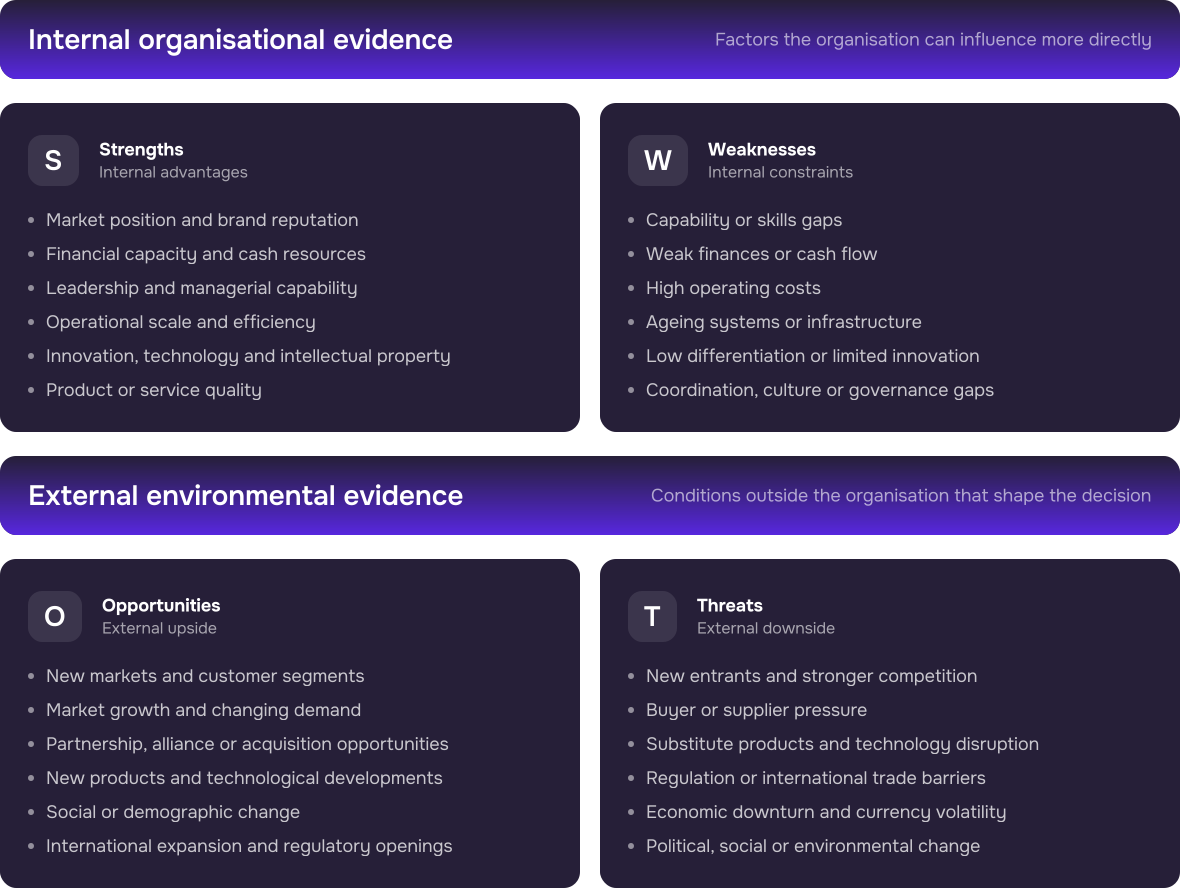
Students assess resources, capabilities, financial position, operations and organisational constraints.

SWOT Analysis Simulation
Students analyse internal organisational evidence and external environmental conditions, then prioritise the strengths, weaknesses, opportunities and threats that matter most to recommend a business decision.
The SWOT Analysis Simulation is a three to four hour, team-based business simulation in which students take the roles of Business Development and Risk Management teams assessing an international expansion opportunity. Students analyse internal organisational evidence and external environmental conditions, classify and prioritise strengths, weaknesses, opportunities and threats, challenge competing interpretations, and defend an evidence-based strategic recommendation.
Students assess resources, capabilities, financial position, operations and organisational constraints.
Read the environment
Students consider demand, competition, regulation, technology and wider environmental conditions.
Teams prioritise the most material factors and defend what the company should do next.
Duration
Set stage timings for one workshop or spread the simulation across several teaching sessions.
Format
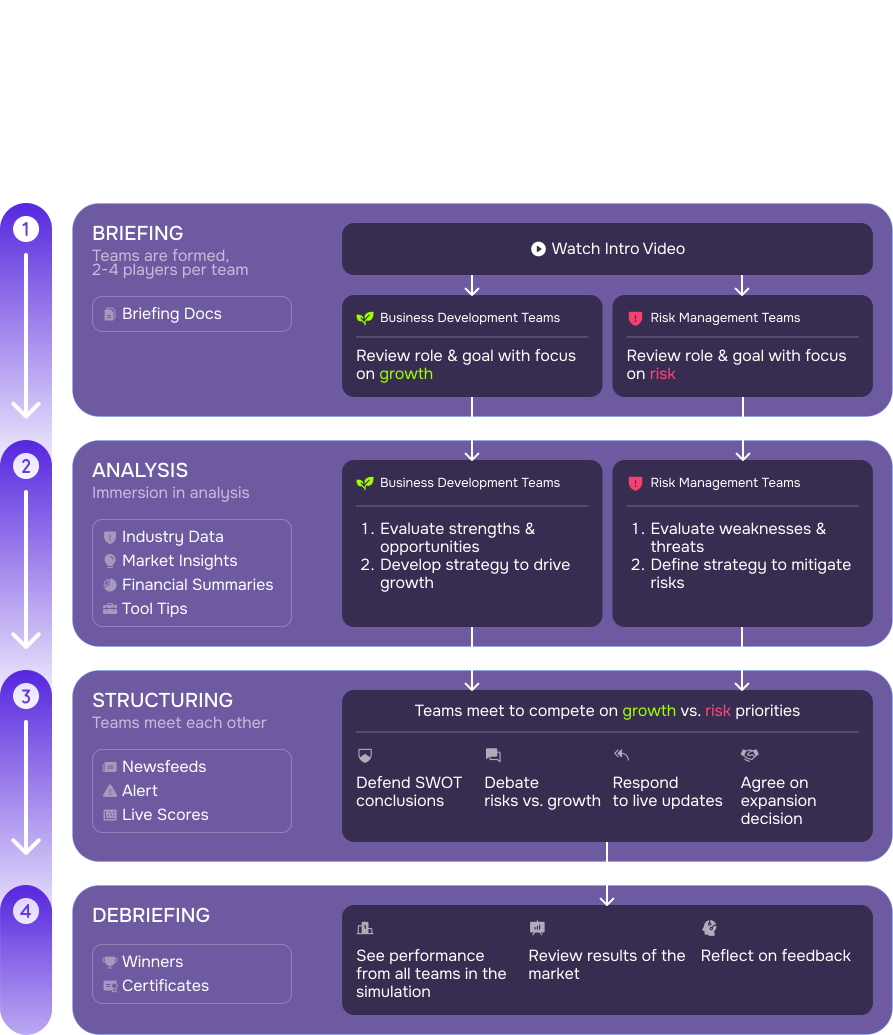
Teams begin from different priorities, then analyse the same internal and external evidence before deciding.
Level
Vary the expected depth of critique, theory and recommendation.
Professor tools
Player management, admin guidance, automated timing and live monitoring are built in.
Prerequisites
A short introduction to SWOT is enough for beginners.
Delivery
Teams collaborate throughout in any delivery format.
Assessment
Use scores, written reasoning and individual reflection as supporting evidence.
Course Fit
Designed for Strategic Management, Business Strategy, Competitive Strategy, International Business, Entrepreneurship or Marketing Strategy
Students distinguish internal organisational evidence from external environmental evidence, then judge which factors are strategically material rather than simply filling four boxes.

The simulation gives professors a structured way to observe how students move from evidence to classification, prioritisation and strategic recommendation.
Students must show how organisational capabilities differ from external market conditions and explain why each factor belongs in its chosen SWOT category.
Students cannot include every available fact. They must decide which factors are strategically material and justify why some evidence matters more than the rest.
Different role priorities lead students to test assumptions, challenge classifications and consider credible alternative interpretations of the same evidence.
The professor dashboard supports setup and delivery; the student interface makes evidence, scoring and reasoning visible.
See stage timings and play controls in one focused view.
Open setup guidance, teaching notes and the gameflow without leaving the admin panel.
See who has progressed, how factors are scored and where a team may need a prompt.
Students understand their team’s perspective, the competing priorities involved, and the objective of determining whether the company should enter the new market.
Students score each factor using the SWOT framework to support their rationale using the case evidence.
At the end of the activity, students review the various negotiation outcomes, final leaderboard and the final score distribution for all the teams.
All teams investigate the same company, strategic decision and evidence base. The role brief changes which questions they ask first - not which parts of the situation they can examine.
Same company. Same decision. Different opening questions.
The Business Development role initially foregrounds demand, capability, growth and strategic fit. Students must still test weaknesses, threats and constraints.
The Risk Management role initially foregrounds cost, regulation, delivery risk and downside exposure. Students must still recognise strengths and opportunities.

5 mins
Watch the briefing students see at the start of the simulation. In under five minutes, it introduces the case, clarifies the strategic challenge and prepares both roles to analyse evidence and defend a decision.
Assessment is optional. Professors can run the simulation as an ungraded applied activity or use comparable performance data, factor scores and written reasoning alongside team outputs and individual reflection. The simulation score supports academic judgement rather than replacing it.
Choose teams and stage timings, press play and the simulation moves students through each stage automatically. Professors act as coaches - intervening only when it adds value.
Step 1
Add students, organise teams and assign the roles.
Step 2
Choose each stage duration once. The timeline then moves students through the session automatically.
Step 3
Pause for discussion, stop between stages or resume from the same point later.
Step 4
Review team progress, factor scores and submitted reasoning without interrupting students.
Everything needed to prepare, run and debrief the SWOT Analysis Simulation is organised below.
The simulation can sit inside an existing course as a single workshop, a staged activity or a homework-supported exercise.
These industry professionals were involved in the inception, creation, development, testing and optimisation of the simulation.

Investment banking, capital markets, PE, and corporate ratings experience at Morgan Stanley, S&P, and HPS Investment Partners. Holds a PhD in Quantitative Finance.

Structured finance, credit derivatives, and NPL expertise. Portfolio Director at a private equity impact fund and active VC investor. Holds CFA and FRM qualifications.

Worked in the finance department of Precomp Tools. Studied Engineering and holds an MSc in Corporate Finance from Bayes.

Assistant Professor of Finance at Tilburg University, teaching corporate finance courses. Also lectures at TIAS Business School.
During the call, we can: